
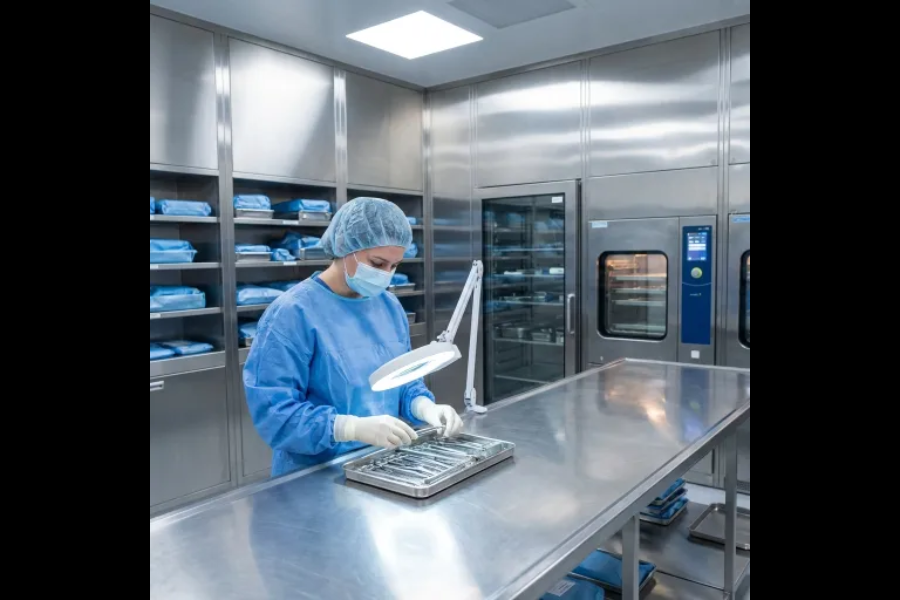

A sterile processing tech ensures surgical instruments and medical devices are cleaned, sterilized, and prepared for safe use. Hospitals, clinics, and outpatient centers depend on your work to prevent infection and protect patients.
You can enter healthcare quickly through this career. Training programs take 6–12 months, and certification such as CRCST strengthens your professional standing. Demand continues to rise as surgical procedures increase worldwide.
What Does a Sterile Processing Tech Do?
A sterile processing tech manages several critical responsibilities that ensure patient safety. You begin with the decontamination of surgical instruments, removing contaminants and preparing them for inspection. After cleaning, you move to the inspection and reassembly of devices, checking each tool for damage and restoring it to proper working order. The next step involves sterilization and packaging for hospital use, where instruments are treated with specialized equipment and sealed for distribution. You also handle tracking instruments with computer systems, maintaining accurate records and verifying that every item is accounted for. Finally, you ensure compliance with infection control standards, following strict protocols that safeguard patients and support surgical teams. Your role directly impacts recovery outcomes, even though you do not interact with patients face-to-face.
Education and Training
You can start with a high school diploma or GED. Employers prefer candidates with training in medical terminology and sterilization procedures. Certificate programs often include:
- Sterile Processing Lecture (online)
- Sterile Processing Clinical (hospital-based)
Certification
The CRCST exam offered by HSPA is the most recognized credential. In 2023, 72% of candidates passed out of 11,128 attempts. Certification proves competence and increases career opportunities.
Salary Potential
According to the Bureau of Labor Statistics:
- Average salary: $45,000 annually
- Entry-level range: $35,000–$40,000
- Experienced CRCST professionals: $50,000+
Sterile processing offers competitive wages compared to other healthcare support roles.
Career Opportunities
Most sterile processing techs build their careers in general medical and surgical hospitals, where the demand for sterilized instruments is constant. Many also work in outpatient care centers, dental offices, physician practices, and ambulatory surgery centers. Each environment offers unique challenges, from handling large volumes of surgical tools in hospitals to managing specialized procedures in smaller clinics. Over time, you can advance into supervisory positions, overseeing entire sterile processing departments, or transition into surgical technology careers where your skills directly support operating room teams. This pathway provides stability, growth, and opportunities to expand your role in healthcare.
FAQs
1. What is a sterile processing tech job description?
You clean, sterilize, and prepare medical instruments for safe use.
2. How long does training take?
Programs last 6–12 months, followed by certification exams.
3. What certification is required?
The CRCST certification is the most recognized credential.
4. What salary can you expect?
Entry-level salaries average $35,000–$40,000, with experienced professionals earning $50,000+ annually.
5. Can you study sterile processing online?
Yes. Many institutions offer online courses combined with clinical practice.
Conclusion
You secure a stable career when you choose to become a sterile processing tech. Hospitals and clinics rely on your expertise to maintain patient safety. Certification and experience open doors to advancement and higher pay.
Statistics show average salaries around $45,000 annually, with strong growth potential. You can start quickly, build valuable healthcare knowledge, and progress into supervisory or surgical technology roles. A career in sterile processing offers you purpose, stability, and opportunity.
Explore timeless narratives, sharp analysis, and unique perspectives at PassageMagazine.