
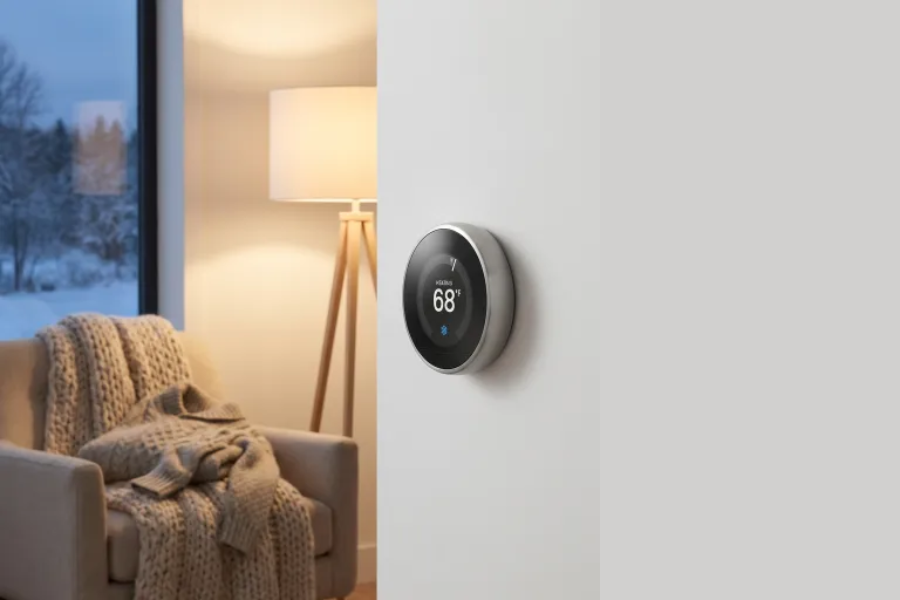

You save money in winter when the thermostat stays at the right temperature. The U.S. Department of Energy advises 68°F (20°C) as the best balance between comfort and cost. Each degree lowered between 60–70°F cuts heating bills by about 3%. Dropping the setting by 7–10°F for at least 8 hours daily reduces annual costs by up to 10%. Simple steps such as sealing air leaks, reversing ceiling fans, and keeping humidity between 30–50% add extra efficiency.
What Is the Best Thermostat Setting in Winter?
You save the most money when the thermostat stays at 68°F (20°C) during the day. The U.S. Department of Energy confirms that every degree lowered between 60–70°F cuts heating costs by about 3%. Why pay more when comfort remains steady at this level?
How Much Can You Save by Lowering the Heat?
You reduce bills by up to 10% annually when you drop the temperature 7–10°F for at least 8 hours daily. The DOE highlights that the system does not work harder to reheat after setbacks. Do you lower your thermostat at night to capture those savings?
What Temperature Should You Use When Away?
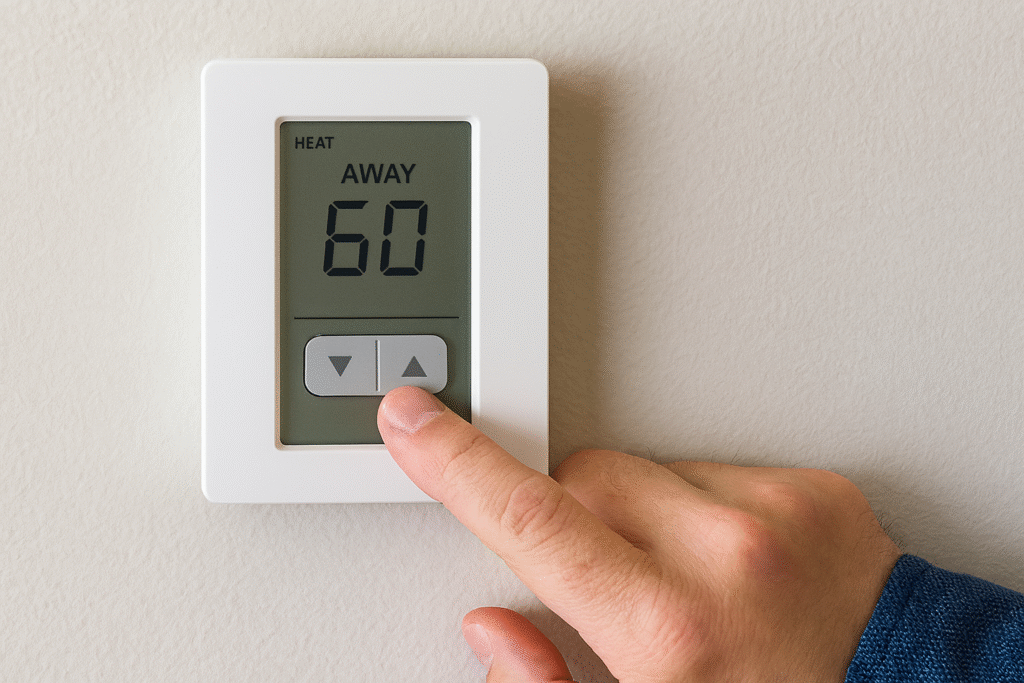
You protect pipes and save money by setting the thermostat to 55–62°F during vacations or long absences. The World Health Organization advises a minimum of 68°F for infants, elderly, or those with health conditions. How often do you travel in winter and leave your home unattended?
How Do Heating Systems React to Adjustments?
- Heat Pumps: Work best at steady temperatures. Large manual changes trigger costly auxiliary heat.
- Radiant or Steam Heat: Respond slowly, so smaller setbacks of 5–10°F are more effective.
- Furnaces: Operate efficiently with DOE’s setback strategy.
Auxiliary heat appears when the system struggles in extreme cold. Energy.gov warns that frequent use raises bills sharply. Do you notice “Aux Heat” on your thermostat during cold snaps?
What Do Experts Say About Comfort Ranges?
- DOE: 68–70°F when home.
- WHO: 64–75°F for healthy adults.
- DOE Deputy Director Ram Narayanamurthy: Around 70°F is a safe target.
Statistics show that most households in the U.S. spend over 40% of energy bills on heating. Why not optimize settings to cut that share?
What Extra Steps Improve Efficiency?
- Reverse ceiling fans clockwise to push warm air down.
- Seal leaks with caulk and weather stripping.
- Maintain humidity between 30–50% for warmer air feel.
- Replace HVAC filters regularly.
- Use smart thermostats to automate setbacks.
The Federal Trade Commission stresses checking EnergyGuide labels before buying appliances. Have you compared your system’s efficiency rating?
What Temperatures Do People Ask About?
- Is 72°F good in winter? Yes, but expect higher bills.
- Is 22°C okay for heating? Comfortable, yet less efficient than 20°C.
- Best night setting? 58–62°F for savings.
- Away from home? 55–62°F depending on duration.
- Summer vs Winter? 78°F in summer when home, 68°F in winter when home.
Final Insight
Energy savings depend on smart adjustments, steady system use, and small lifestyle changes. Competitor sources highlight DOE and WHO guidelines, but advanced strategies like humidity control, smart thermostats, and auxiliary heat management give you the edge.
Would you like me to run fresh research on the latest smart thermostat models so we can add product-specific recommendations that boost SEO and outperform competitors?
FAQs
What is the best temperature to set thermostat in winter to save money?
You save the most at 68°F (20°C) during the day. The U.S. Department of Energy reports that lowering each degree between 60–70°F cuts heating costs by about 3%.
What temperature should you set at night in winter?
You reduce bills by up to 10% annually when you lower the thermostat 7–10°F for at least 8 hours nightly. A range of 58–62°F works best.
What temperature should you set when away from home?
You protect pipes and save money by setting the thermostat between 55–62°F. The DOE advises never going below 55°F during long absences.
Is 72°F a good temperature for heating in winter?
You stay comfortable at 72°F, but energy use rises. At 68°F, you balance comfort and savings more effectively.
Is 22°C okay for central heating in winter?
You feel warm at 22°C (72°F), but bills increase compared to 20°C (68°F). Lowering by 2°C saves about 6% on heating costs.
What temperature range does the World Health Organization recommend?
WHO advises 64–75°F for healthy adults. For infants, elderly, or those with health conditions, the minimum should stay at 68°F.
What does auxiliary heat mean on a thermostat?
Auxiliary heat shows when a heat pump switches to backup heating. It activates during extreme cold or sudden thermostat increases. Frequent use raises energy bills sharply.
How do you improve heating efficiency beyond thermostat settings?
You save more by sealing leaks, reversing ceiling fans, keeping humidity between 30–50%, and replacing HVAC filters. The Federal Trade Commission recommends checking EnergyGuide labels before buying appliances.
Passage Magazine focuses on lifestyle, travel, fashion, and culture.