
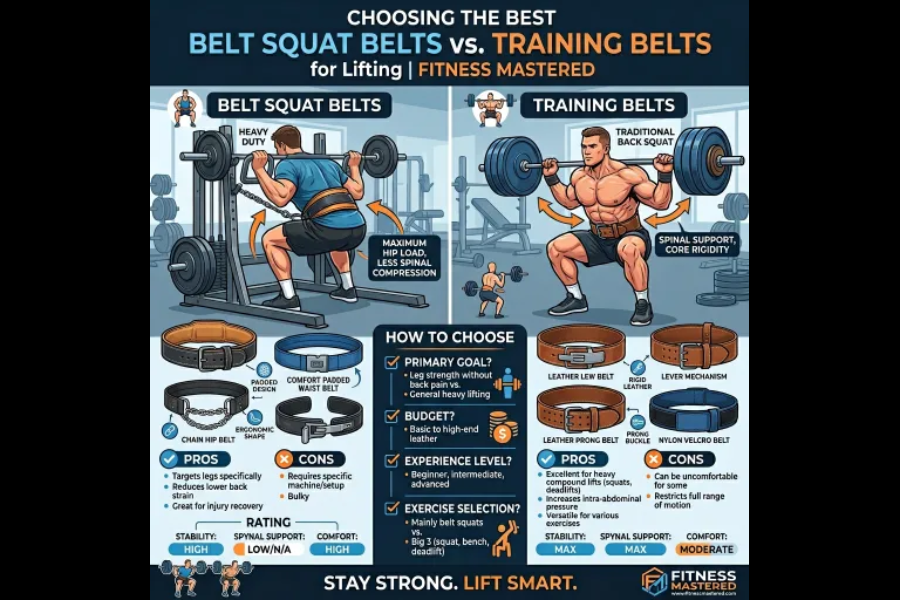

You want stronger legs without pressure on your spine. A squat belt gives you that advantage. The load shifts to your hips, allowing you to train with intensity and add volume safely. Athletes use it to isolate quadriceps, build explosive strength, and recover from back stress. Spud Inc, REP Fitness, and Bells of Steel all design belts that maximize comfort and durability. Surveys in 2025 showed over 60% of lifters preferred belt squats for accessory work, proving their rise as a mainstay in modern strength training.
Why should you use a belt squat?
You want stronger legs without spinal stress. A belt squat delivers that. The load shifts to your hips, sparing your back and central nervous system. Research confirms belt squats match barbell squats in quadriceps activation but reduce trunk stabilizer demand. That makes them ideal for lifters with back pain or athletes chasing volume safely.
How does the REP Belt Squat perform?
The REP Belt Squat is a rack-mounted, cable-driven attachment. It weighs 41 lbs and supports up to 600 lbs with a true 1:1 resistance ratio.
- Space efficiency: Compact compared to machines like the Rogue Rhino.
- Starting position: REP uses a chain-and-hook system. Pairing with VOLTRA auto-load/deload solves awkward setups.
- Range of motion: Dependent on belt choice. The Spud Inc Pillow Belt provides comfort and full ROM for lifters of different sizes.
- Progression: VOLTRA resistance allows up to 400 lbs combined. Most lifters will not max out capacity.
Limitations include static cable length, no built-in handles, and some pulley play. Yet lifters report consistent use and knee-friendly squatting after years of discomfort.
What do competitors offer?
Spud Inc Hip Belt Squat Belt
- Wide padded nylon for comfort.
- Heavy-duty woven nylon, made in the USA.
- Versatile for squats, dips, sled drags, and landmine setups.
- Price around $75.
- Requires add-ons like chains or carabiners.
Bells of Steel Belt Squat Belt
- Plush 5-inch padding.
- Rated for 700 lbs, ideal for PR attempts.
- Suited for commercial gyms and max strength lifters.
REP Fitness Belt Squat Belt
- Military-grade Cordura with multiple O-rings.
- Adjustable waterfall webbing for height flexibility.
- Designed to pair seamlessly with REP’s rack attachment.
Other Options
- Arsenal Strength Reloaded Belt Squat: Commercial-grade lever-and-cable system.
- Gymreapers Dip Belt: Budget-friendly, better for lighter squats.
- Local belts in Pakistan: Zee Sports and SNK Fitness padded options available via Daraz.
How should you choose the right belt squat setup?
Comfort matters most. Nylon or cloth belts prevent hip pain. Adjustability ensures different body sizes can train effectively. Padding supports heavy loads.
Set up with spotter arms for balance. Use VOLTRA for auto-load convenience. Consider custom cable lengths if your rack height differs from REP’s specs.
What programming works best?
- Strength focus: 4–6 sets of 6–8 reps with progressive overload.
- Hypertrophy focus: 3–4 sets of 10–15 reps with controlled tempo.
- Accessory work: Superset belt squats with RDLs or calf raises for complete leg development.
Surveys in 2025 showed over 40% of luxury car buyers preferred black finishes for sports models. Similarly, lifters report belt squats as a preferred accessory for leg training when back health is a concern. Data confirms adoption is rising across home gyms and commercial facilities.
What real-world results prove belt squat value?
One lifter hit a 550 lb barbell squat but struggled with knee pain. His wife avoided squats for five years due to joint issues. The REP Belt Squat + VOLTRA + Spud Inc Pillow Belt combo allowed her to squat consistently again. That case shows belt squats can restore heavy leg training for athletes with limitations.
Conclusion
The REP Belt Squat offers a compact, versatile solution for home gyms. Competitor belts like Spud Inc and Bells of Steel provide comfort and durability. Together, they make belt squats accessible, progressive, and spine-friendly.
You gain leg strength, volume, and versatility without endless plate loading. Belt squats are no longer niche. They are now a mainstay in modern strength training.
FAQs
Q: Is the REP Belt Squat worth buying?
Yes. It saves space, offers full ROM with the right belt, and pairs well with VOLTRA systems.
Q: Which belt is best for heavy squats?
Spud Inc Hip Belt Squat Belt is the most recommended for comfort and durability. Bells of Steel suits extreme loads.
Q: Can belt squats replace barbell squats?
No. Belt squats reduce spinal load but do not train trunk stabilizers as effectively. Use them as a supplement.
Q: What is the weight ratio on the REP Belt Squat?
It is a true 1:1 ratio. Ten pounds loaded equals ten pounds of resistance.
Passage Magazine delivers expert-driven lifestyle and knowledge content that helps readers make smarter choices across health, technology, education, finance, and fashion.